Egypt - Red Sea · Riff
Gubal Soraya
The dive site
Gubal Soraya at a glance
"Gubal" translates to "the mountain," and "Soraya" means "small"; together, they mean "Little Mountain" in the Strait of Gubal.
The island of Gubal Soraya is uninhabited. The bay of Gubal Soraya is a popular spot for overnight anchorage. Beneath the anchorage lies a sandy plateau that slopes very gently from about 8 to 25 meters. If you were to dive at this spot during the day, you’d quickly find yourself wondering what you ever did to the guide to deserve having to dive here. Shortly after that, you’d start thinking about lynching the guide as soon as you’re back on board. At night, however, this dive site is completely different—a true thriller, with one highlight following another. Even very experienced divers emerge from the water after two hours, shivering from the cold but with eyes aglow, and eager to dive again immediately.
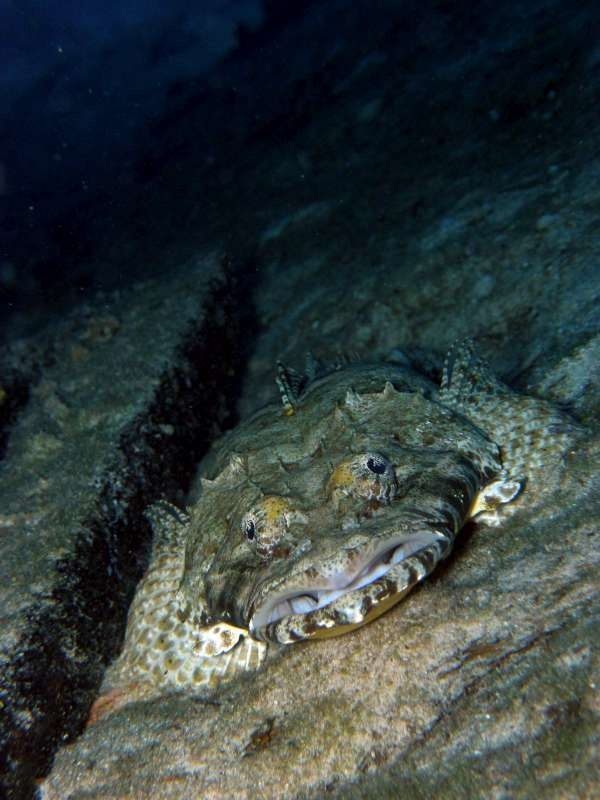
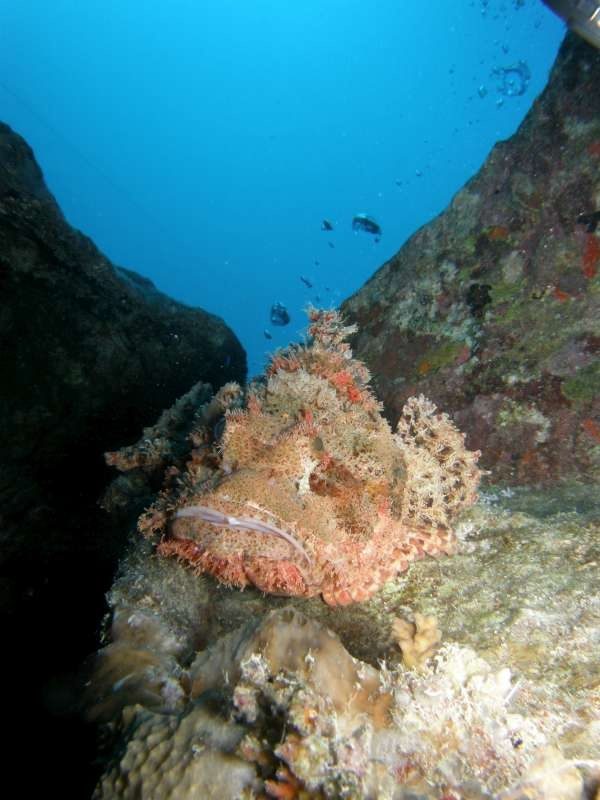
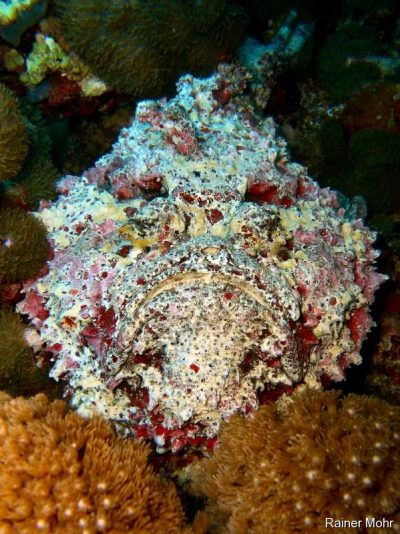
At a depth of 14 meters lies the barge, the wreck of a former transport barge. Today, only a few remnants remain of the 36-meter-long and 6-meter-wide barge. The barge is home to the great-grandmother of all Red Sea moray eels, three stonefish, scorpionfish, and crocodilefish, all well-camouflaged within the wreck and its remains. Many lionfish and schools of sky-blue fusiliers make this night dive a special experience.
Bluff Point
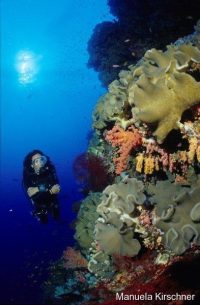
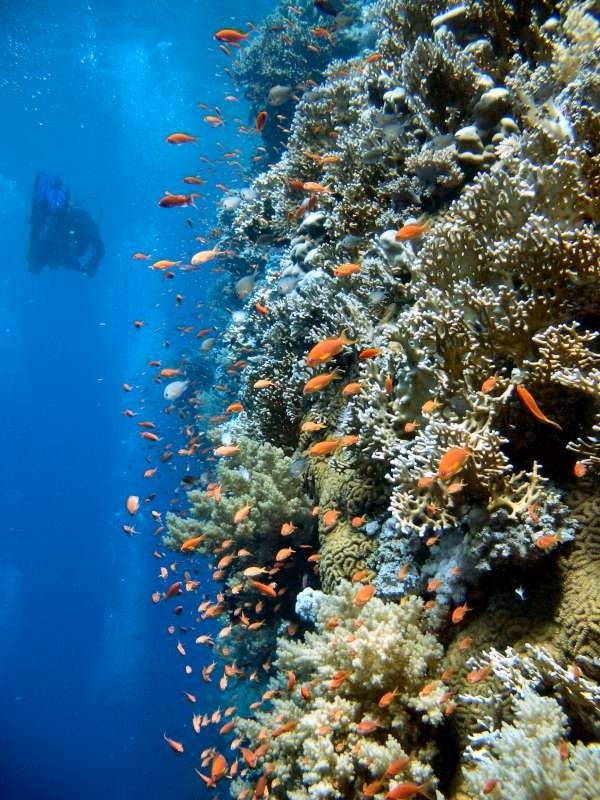
The sloping wall is richly covered with stony and soft corals, as well as black corals and numerous grogonian fans. In the first few meters of the reef wall, there are several overhangs populated by schools of glassfish. The reef literally pulsates with the numerous bannerfish. However, the dive site is very treacherous in terms of currents; the current—which can be very strong—often changes direction several times during the dive, and you must be very careful not to lose contact with the reef, as the current frequently pulls you out to the open sea, away from the reef.
Ulysses
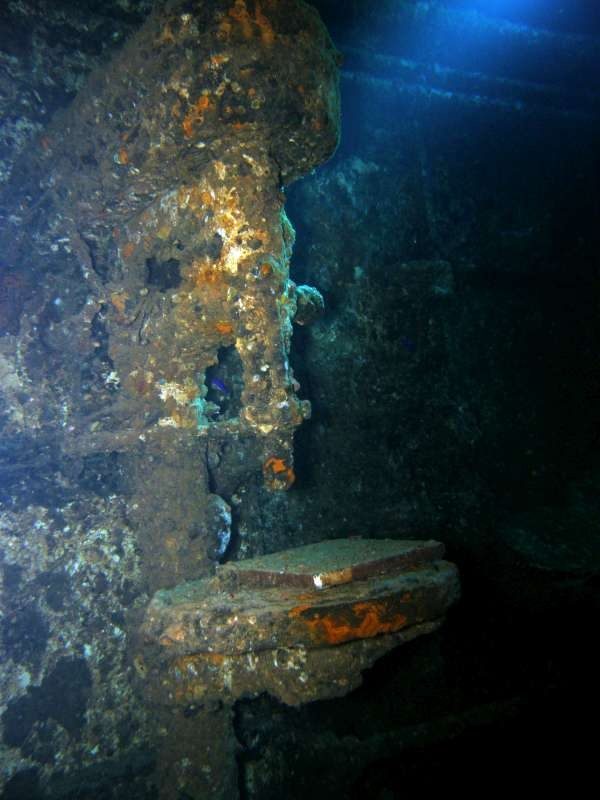
On the northeastern outer edge of Gubal Soraya lies the wreck of the “Ulysses.” It is heavily damaged in the midship and forward sections, but is fascinating due to its extensive marine growth. The sea has almost completely taken over the “Ulysses.” The stern, with its three-bladed propeller, is still clearly recognizable. This is the best place to start the dive. Worth seeing are the remains of the engine, the smokestack, and the overgrown frames and hull fragments. Due to currents that can be very strong at times, visibility around the wreck isn’t always the best.
Length: 104 m
Width: 10 m
Launched: 1871
Cargo on its final voyage: tiles, pipes, electrical equipment, cables and cable reels, ceramic insulators.
Sinking: 1887
Cause of sinking: most likely loss of heading
These safari routes call at Gubal Soraya:
Images